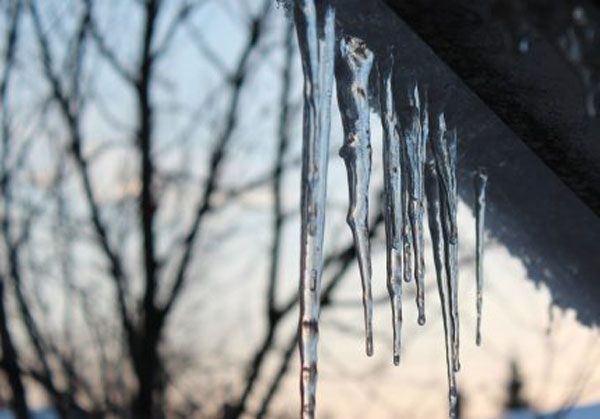
Preparing Eavestroughs & Soffits for Southern Ontario Snow & Freezes
When November winds roll through the Greater Toronto Area, most conversations among homeowners turn to turning up the thermostat, winter tire swaps, and yard cleanups. But as exterior contractors who have spent decades delivering quality exterior home renovations throughout the region, we always remind our community that your roofline drainage is your home’s unsung winter hero.
Your eavestroughs, fascia, and soffits form a complete water management and ventilation envelope. In warmer months, their job is relatively straightforward: channel torrential rain off the shingles and safely away from your home. In the dead of a Southern Ontario winter, however, that drainage system faces a far more brutal test: heavy snow loads, repeated freeze-thaw cycles, and the constant threat of ice damming.
If your drainage fails when the snow starts falling, the consequences don’t stay on the roof. Unmanaged meltwater dumps directly along foundation walls, triggering hydrostatic pressure and structural cracking.
Here is what you need to know about preparing your eavestroughs and soffits for winter, and how heavy-gauge aluminum, clean channels, and proper downspout extensions protect your foundation from costly freeze-thaw damage.
The Hidden Mechanics of Freeze-Thaw Foundation Damage
Keeping water away from the base of your house starts 25 to 30 feet in the air, right at the roofline. To understand why your roof drainage matters so much to your basement, you have to look at how Southern Ontario soils behave between December and March.
Much of the GTA, from Etobicoke clay plains out toward Halton and Peel, sits on dense, clay-heavy soils. Clay acts like a dense sponge: it absorbs large quantities of moisture and expands significantly. When winter arrives, the temperature in Toronto regularly swings between +3°C during a sunny afternoon and -8°C overnight.
When your eavestroughs are clogged, overflowing, or dumping water directly at the corner of your house, thousands of litres of roof runoff saturate the soil immediately surrounding your foundation walls. When that saturated soil freezes, water expands by roughly 9% in volume. This expansion generates immense lateral force known as frost heave and hydrostatic pressure.
Over successive freeze-thaw cycles, this repetitive pressure:
- Pushes inward against poured concrete or concrete block foundation walls.
- Forces hairline settlement cracks to open wider, breaking waterproof exterior membranes.
- Allows freezing meltwater to seep into the porous concrete, spalling the foundation and creating persistent basement leaks.
1. Clean Eavestroughs: Preventing the 300-Pound Ice Trough
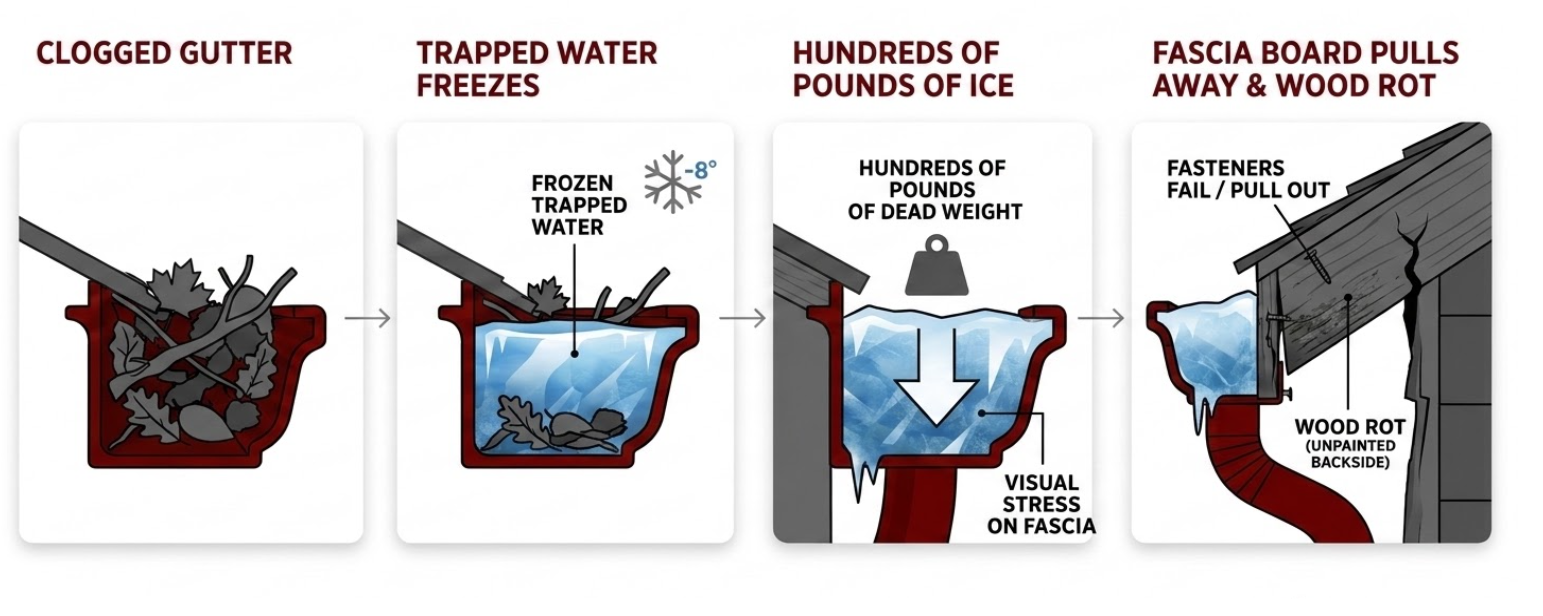
By mid-to-late November, oak and maple trees have dropped their heavy canopy across mature neighbourhoods like The Kingsway, Sunnylea, and Lorne Park. When wet leaves, twigs, and shingle granules sit in your gutters, they act like a sponge and a dam. During late-autumn rains, this debris stops water from reaching the downspout drop outlets. Then comes the first sub-zero snap.
Trapped standing water freezes solid. A standard 10-foot run of eavestrough filled with frozen water and slush can easily weigh upwards of 150 to 200 pounds. Add a fresh layer of heavy wet snow on top, and you have hundreds of pounds of dead weight pulling outward on your fascia boards.
When gutters are weighed down by ice we can expect the following:
- Fasteners fail: Spikes or hidden brackets pull straight out of the wooden sub-fascia.
- Pitch is ruined: Even if the gutter doesn't fall off, the slope is permanently warped, meaning it will pool water backwards rather than draining toward downspouts in the spring.
- Wood rots: Overflowing ice backs up behind the gutter, trapping water against the unpainted backside of your fascia board and rotting the rafter tails.
*Contractor Advice: Clean your gutters after the last leaves have fallen in November. Flush them completely with a hose to verify that downspout elbows are 100% clear. If you have recurring issues with heavy leaf fall, talk to an exterior specialist about installing heavy-duty aluminum leaf guards or upgrading from standard 4-inch gutters to high-capacity 5-inch seamless eavestroughs that handle winter runoff without bottlenecking.
2. Heavy-Gauge Aluminum Soffits: The Key to Balanced Attic Temps
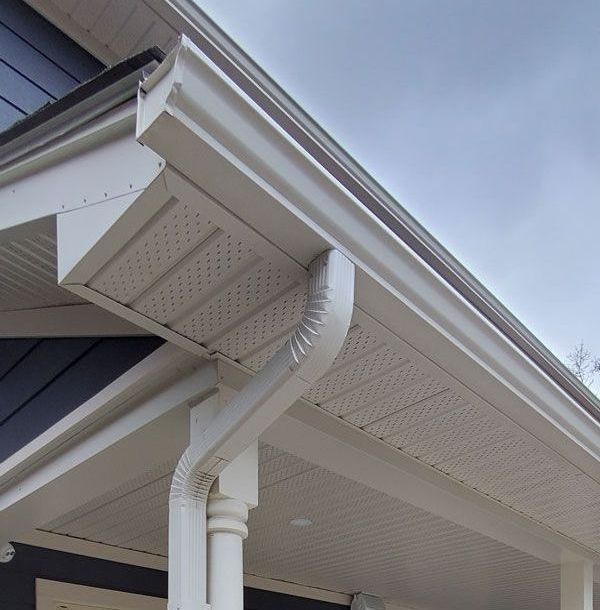
Homeowners often view soffits (the perforated panels underneath your roof overhang) purely as a decorative trim to hide roof rafters. In reality, soffits are an essential mechanical component of your home's thermal management.
A healthy roof system requires continuous passive ventilation: cold exterior air enters through the perforated soffits along the eaves, sweeps upward beneath the roof deck, and exhausts through static roof vents or ridge vents near the peak.
This steady airflow ensures that the temperature of your roof deck stays as close to the ambient outside temperature as possible.
Why Flimsy or Clogged Soffits Cause Ice Dams
When older vinyl soffits sag, or lightweight aluminum panels buckle under wind and ice, exterior intake airflow is choked off. Without fresh intake air sweeping through the eaves:
- Escaping household heat gets trapped inside the upper attic cavity.
- The warm roof deck melts the underside of the snow blanket on your shingles.
- The resulting trickle of meltwater runs down to the colder, unheated overhang (the eavestrough area), where it immediately refreezes into a thick ridge of ice: an ice dam.
- Meltwater pools behind the ice dam and forces its way under shingles, soaking roof sheathing, dripping into ceiling drywall, and rotting the soffit framing below.
Upgrading to heavy-gauge aluminum soffit systems provides structural rigidity that won't warp or blow out during severe winter blizzards. Heavy-gauge aluminum also resists animal intrusion—preventing squirrels, raccoons, and birds from pushing past flimsy plastic vents to nest in your warm attic over the winter.
3. Downspout Extensions: Directing Water Beyond the Danger Zone
Clearing your gutters and installing sturdy soffits is only half the battle. Once your eavestroughs collect snowmelt, where is that water going?
In many GTA homes, downspouts terminate directly at the corner of the building, dumping hundreds of gallons of meltwater right onto the splash block 12 inches from the foundation wall. In freezing weather, that concentrated volume of water has nowhere to go. It saturates the backfill soil around the basement and freezes into a subterranean frost block against your foundation.
To prevent basement flooding and protect structural footings, downspouts must discharge well away from foundation walls. Under the City of Toronto Basement Flooding Protection Guidelines, disconnected downspouts must drain onto a permeable surface (such as a lawn or garden) at an absolute minimum distance of 1.8 to 2 metres (6 feet) away from foundation walls.
Best Practices for Winter Downspout Extensions
| Configuration | Winter Consideration | Recommended Action |
|---|---|---|
| Hinged Flip-Up Extensions | Easy to lift when mowing, but can get buried in deep snowbanks | Keep lowered before heavy snowfalls; ensure runoff slopes away |
| Rigid Aluminum Extensions | Sturdy; handles heavy ice flow without cracking in -20°C cold | Secure with sheet metal screws; elevate slightly above ground level |
| Corrugated Plastic Flex Pipes | Prone to crushing under snow piles; ribs trap freezing water | Avoid in winter; replace with smooth-walled rigid aluminum pipes |
| Splash Blocks | Help prevent soil erosion at the pipe exit | Place firmly under the extension tip to disperse runoff across the lawn |
*Important Safety Note for Winter: Never direct downspout runoff across public sidewalks, walkways, or shared driveways. When melting snow refreezes at night, it creates severe slip hazards (black ice) and violates municipal bylaws.
The Pre-Winter Roofline & Drainage Checklist
Before the first prolonged freeze locks in across Southern Ontario, take an hour to walk your property perimeter with this quick checklist:
- Debris Cleared: Remove all leaves, acorns, and pine needles from eavestrough runs and outlet elbows.
- Pitch Checked: Ensure gutters slope slightly toward downspouts (roughly 1/4 inch of drop per 10 feet of run) with no visible low sags.
- Brackets & Fasteners Secured: Give the gutters a gentle push upward; if brackets wiggle or pull out from the fascia, tighten or replace them with heavy-duty exterior screws.
- Soffit Inlets Inspected: Look up beneath the eaves to confirm perforated aluminum panels are seated firmly and clear of dirt, cobwebs, or dislodged insulation.
- Downspout Extensions Deployed: Fasten rigid extensions directing all discharge at least 6 feet away from your foundation onto a properly graded lawn or garden bed.
Build a Resilient Exterior with Peter & Greg Walker Contracting

Your home's roofline and foundation are directly connected. When your eavestroughs, heavy-gauge soffits, and downspout extensions work as a unified system, your home stays dry, your attic stays ventilated, and your foundation remains protected against the destructive forces of Ontario's freeze-thaw cycles.
If your eavestroughs are pulling away from your fascia, your soffits are damaged, or you want to upgrade your
eavestroughs and downspouts before winter hits, our family-owned team at Peter & Greg Walker Contracting is here to help. With decades of hands-on experience across the GTA, we provide honest advice and durable, high-quality exterior solutions built to withstand our Canadian climate. Ask for your free estimate!